
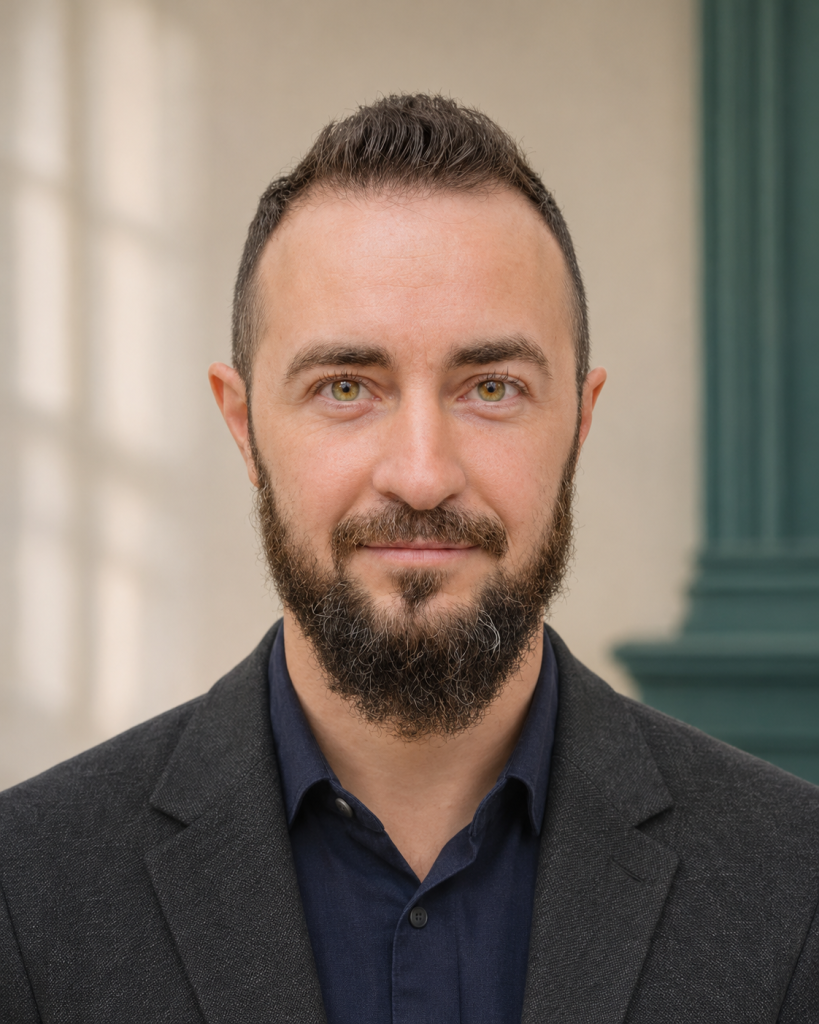
Researcher · Amerpass Research Lab
Siarhei Kudliankou
Independent researcher · International journalist
Belarusian journalist and independent researcher based in the United States. He studies how displaced people plan a return, find work and legal help, and decide when to trust public institutions.
Biography
Siarhei Kudliankou is a Belarusian journalist and independent researcher based in the United States. His work focuses on forced migration, human rights and diaspora communities. He studies the decisions people face when they leave familiar surroundings, navigate new institutions and maintain responsibilities to relatives living in another country.
His professional background includes work as a U.S. correspondent for NEWSru.co.il and as a photographer and reporter for United States Press Agency / German Daily News. His journalistic interests encompass the experiences of Belarusian and Russian refugees and asylum seekers, political developments in Eastern Europe, and disinformation affecting immigrant communities. These concerns connect international events with their practical consequences for individuals and families.
His research draws on published surveys, administrative evidence, humanitarian documents and scholarship. It examines the relationship between formal procedures and the choices people can carry out with the time, income, information and support available to them. A recurring concern is the distance between an intention, an accessible resource and a completed action.
At Amerpass Research Lab, Kudliankou studies the decisions families face after displacement. His recent work follows people weighing a return to Ukraine, trying to resume a profession abroad, or choosing whom to consult about a U.S. immigration case. He draws on published surveys and case accounts to examine the choices open to a particular household.
Research programme
The programme asks how political events and administrative procedures change the choices people can make and sustain. Answering that question requires considering information alongside documentation, time, income and family obligations. This perspective brings everyday constraints into an analysis that might otherwise rely mainly on aggregate measures of movement.
Emigration and mutual-aid infrastructure
Research on Belarusian emigration after 2020 examines several practical functions of mutual aid. Meeting immediate expenses, explaining procedures, preserving professional relationships and facilitating employment can support different stages of a move. The programme considers how these functions relate to destination choice and the possibility of establishing a life abroad. Different migration channels are examined through the purposes and limits of the available records.
Departure and return decisions during war
A wish to leave, preparation for departure, crossing a border and choosing a longer-term destination are distinct stages. Kudliankou examines these stages through evidence concerning Ukraine, Belarus and Russia. His approach accommodates changing plans, continuing dependence on employment and income, relatives’ circumstances and conditional return intentions. Comparisons retain the differences between national settings and the populations included in each study.
Choosing legal help and dealing with public institutions
In the United States, how can someone check that a recommended adviser has the authority to represent them? What makes a household willing to answer a census worker, call the police or apply for public benefits? Kudliankou studies these decisions through published accounts of encounters with officials, survey evidence and the records people can consult when choosing a representative.
Information, trust and access to assistance
Work on emergency displacement connects messages with specific route and temporary accommodation decisions. Relevant questions concern who provides an offer, whether it remains current, who accepts responsibility and where a person can obtain help. Access to a digital channel, confidence in a contact and verification of an arrangement are treated as distinct parts of an information pathway.
Families living across borders
Family support is examined through the distribution of money, coordination and care provided in person. These responsibilities can remain shared after relatives begin living in different places. The programme considers children, older relatives and adults combining employment with care. It asks how arrangements remain workable and what happens when an established source of support becomes unavailable.
Administrative waiting and everyday planning
Research on asylum waiting relates procedural events to commitments involving employment, education and family life. It distinguishes elapsed time, uncertainty about the remaining wait and restrictions operating during that period. This approach makes it possible to describe postponed opportunities more precisely and to examine consequences that may continue after a case has been decided.
Journalism, human rights and diaspora communication
A journalistic perspective supports attention to the origins of information and to circumstances that aggregate indicators may overlook. Further work in this area concerns disinformation, public communication and the conditions under which immigrant communities interpret political events. Journalism and documentary research contribute different forms of evidence, each retaining its own methods and standards of attribution.
Publications and research
The series includes five studies with Zenodo records, followed by working papers 6–10, prepared for repository submission in November 2026. The date given for each working paper identifies the latest sources it considers.
Belarusian Emigration after 2020: Mutual Aid and Destination Choice through January 2022
Retrospective documentary study · Zenodo
This study examines the interaction between political pressure, established migration routes and assistance available abroad. Its discussion of Poland and Lithuania distinguishes immediate financial support, procedural guidance, professional connections and access to employment. It keeps immigration flows, protection applications, visas and financial transfers analytically separate. The resulting framework provides a basis for comparing support mechanisms and developing further research on individual migration trajectories.
War and Changing Migration Intentions: Decisions to Leave Ukraine, Belarus and Russia in Early 2022
Retrospective comparative study · Zenodo
Following Russia’s full-scale invasion of Ukraine, a comparison of published surveys and contemporary documents examines different combinations of emergency departure, safety, employment continuity and plans to return. The analysis separates the wish to move, preparation, actual movement and the expected duration of absence. It develops a practical framework for recording decision timing, household constraints and conditional return plans while preserving differences between countries and the groups represented in each source.
Information and Trust during Emergency Displacement: Route and Temporary Accommodation Decisions in the Early Ukraine Response
Retrospective documentary study · Zenodo
This paper brings together published survey findings, other researchers’ field observations and humanitarian guidance. It examines the overlapping roles of digital communication, volunteers and personal contacts in route and housing decisions. Its proposed record connects a message to a responsible provider, a current offer and a way to obtain help when an arrangement fails. The framework supports further study of the practical usefulness of emergency communication.
Families across Borders: Responsibilities, Financial Support and Care after Displacement
Retrospective documentary study · Zenodo
The family is treated as a network whose members may live in several locations while remaining responsible for one another. Drawing on evidence concerning displacement from Ukraine, the paper considers care, financial support and everyday decisions. It distinguishes paying for a task, arranging it and carrying it out in person. A proposed family assessment records needs, available helpers, resources and the consequences of a support arrangement breaking down.
Waiting for an Asylum Decision: Time Uncertainty and Everyday Planning
Retrospective documentary study · Zenodo
This study relates administrative waiting to decisions about employment, education and family life. Evidence from different national contexts is considered in relation to the particular forms of delay and outcomes each source measures. It proposes following procedural events alongside opportunities accepted, postponed or lost. The paper also considers how public reporting and communication can make an unresolved procedure more understandable to the people affected by it.
Return Plans after a Year of War in Ukraine
Evidence from Refugee Surveys in Europe
Working paper 6
Kudliankou compares UNHCR surveys with surveys in Germany and the United Kingdom. He examines how answers change when refugees are asked whether they hope to return someday, plan to return within three months or expect to stay in their host country for several years.
Language Access for Ukrainians Displaced to the United States
News Reports, Interpreters and Community Referrals
Working paper 7
A Ukrainian-language headline about an extension of humanitarian parole provides the starting point. Comparing the news report with the official notice, Kudliankou asks how a reader can establish who qualifies, who makes the decision and where to find confirmation in an individual case.
The First Job after Displacement from Ukraine
Journalists and Other Professionals in European Labour Markets
Working paper 8
A Ukrainian journalist continued reporting from Berlin. A physician from Kyiv took an administrative job in a Polish clinic before returning to clinical practice. Their accounts, read alongside German and British surveys, show why a job title or industry alone tells us little about which professional duties someone can still perform.
How Migrants Choose Immigration Legal Help
Personal Referrals, Online Reviews and Professional Credentials in the United States
Working paper 9
Drawing on a Washington-area survey of 171 participants, a study of client reviews and federal records, Kudliankou examines what migrants can learn from a personal recommendation and how they can check a provider’s authority to advise them or appear in immigration court.
Trust in American Institutions After Migration
How Earlier Encounters with Government Shape Decisions in the United States
Working paper 10
Why would someone who rates local police favorably hesitate to call for help? Drawing on eight published studies and reports, including Russian-language census focus groups, Kudliankou examines how earlier encounters with officials and concern for household members enter decisions about police contact, census participation and public benefits.
Programme development
The research programme develops from individual documentary studies towards a comparable account of decisions, resources and responsibilities after displacement. The following directions describe tasks for further work.
A documentary base for migration decisions
Research programme development
This direction concerns the systematic organisation of public administrative records, surveys and mutual-aid documents. Important source attributes include date, population, territory, indicator definition and comparability. A structured documentary base would support the tracing of procedural changes and a more precise connection between aggregate evidence and questions about individual choices.
The displaced person’s information pathway
Research programme development
Further work would examine the relationship between a message, its verification and an action available to its recipient. A prospective design would record an offer of assistance, the responsible participant, its period of validity and the outcome of contact. It would support comparison of information barriers in route selection, housing searches and encounters with institutions.
Families and the time horizon of adaptation
Research programme development
This direction connects transnational care with administrative waiting. It focuses on responsibilities to relatives, changes in employment and decisions that require some certainty about time. Further research could follow how families reorganise support when waiting is extended, income is lost or relatives’ care needs change.
Curriculum vitae
Professional profile
Independent researcher and international journalist based in the United States. Main areas: forced migration, human rights, diaspora communities, institutional trust and the everyday consequences of political change.
Professional background
| Organisation / field | Role |
|---|---|
| NEWSru.co.il | U.S. correspondent. |
| United States Press Agency / German Daily News | Photographer and reporter. |
| Independent research | Documentary research on forced migration, family support, return decisions, employment, access to legal help and trust in public institutions. |
Methods and research practice
- Analysis of published empirical research and institutional documents.
- Comparison of migration indicators with attention to definitions, territories and study populations.
- Development of frameworks for describing decisions, information sources, resources and family obligations.
- Connecting journalistic attention to specific circumstances with a documentary research approach.
Research identifiers
ORCID: 0009-0002-9421-1126 · Permanent Amerpass Research Lab profile
Professional record
Honors & professional recognition
Professional credentials
Professional credentials
-
U.S. correspondent press credential
NEWSru.co.il
Professional press identification for correspondent work in the United States.
-
Photographer and reporter press credential
United States Press Agency / German Daily News
Professional photographer/reporter identification in the Politics & Legal field.
-
Press accreditation and registered certification
European Press Federation
Professional press accreditation and registered press certification.