
Researcher · Amerpass Research Lab
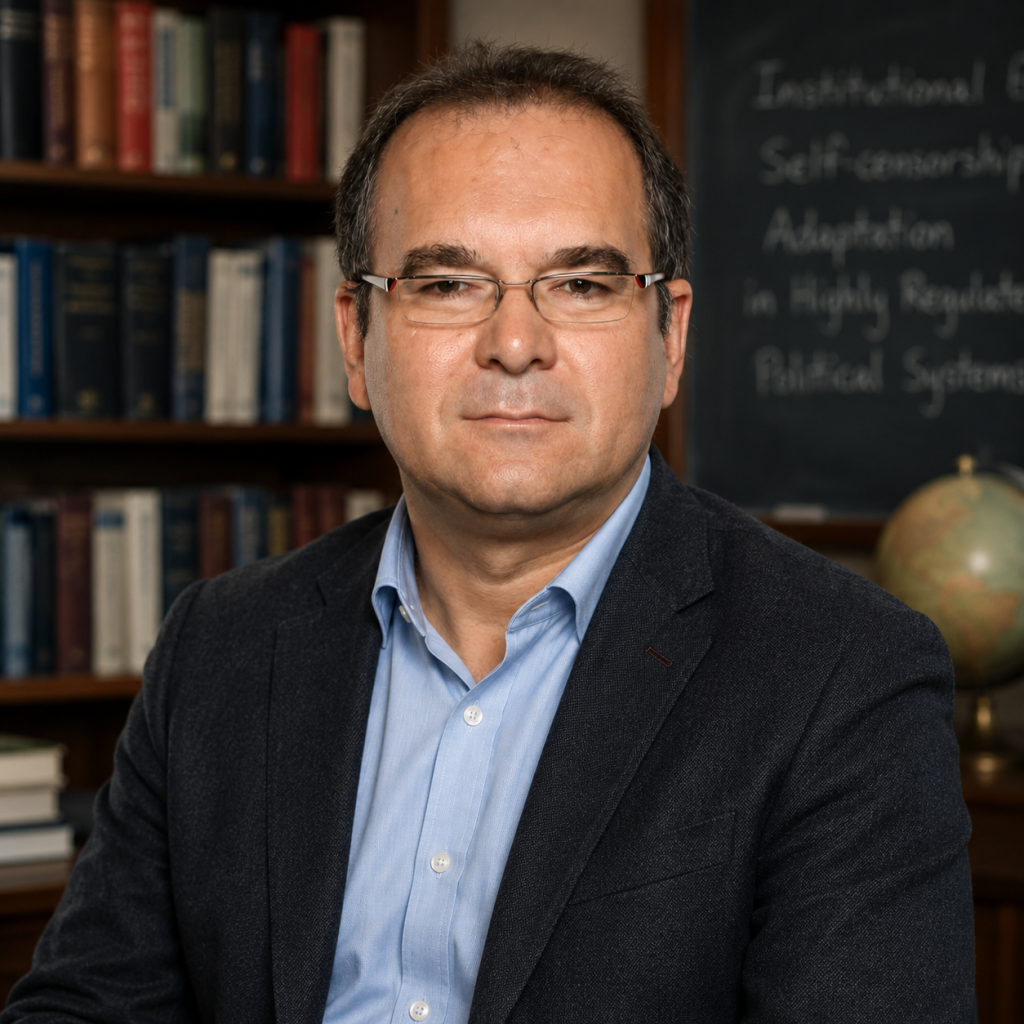
Igor Leonov
Founder and President of Amerpass Foundation · Independent researcher
Independent researcher, journalist, and publisher; founder and president of Amerpass Foundation. His research examines professional continuity, institutional trust, migration, documentary evidence, and public communication.
Biography and professional path
Igor Leonov is an independent researcher, journalist, publisher, and the founder and president of Amerpass Foundation. For more than 25 years, his work has connected migration, public communication, and initiatives that preserve and communicate human experience. Within Amerpass Research Lab, he brings that practical background to research on professional continuity, institutional trust, and encounters between people and institutions.
His work spans concept development, organizational design, program building, editing and publishing, research collaboration, and digital infrastructure. A recurring concern is the professional biography: how experience becomes visible, what institutions accept as credible evidence, and how qualifications are affected by movement between countries and institutional settings.
According to his academic CV, Leonov founded and directed INDEMIR from 2000 to 2006, leading research and civic initiatives in demography, migration, regional development, and professional mobility. In 2005 he created RUPASS, a non-state professional identification initiative, and led its development from 2005 to 2012. That experience became a practical foundation for his later work on trust, professional recognition, and administrative resistance.
His journalism and publishing history includes Russian Migration and Russkaya Migratsiya from 2005 to 2021. His roles varied over time: the surviving 2009 issue identifies him as project director, while records from 2010–2013 identify him as editor-in-chief and publisher. These publications examined migration policy, labor mobility, community life, and the consequences of administrative decisions.
In 2024, Leonov founded Amerpass Foundation in the United States. The foundation brings together migrant support, education, employment assistance, cultural programs, independent journalism, and research. His responsibilities include its mission and institutional model, program development, publishing, research collaborations, and digital infrastructure. Amerpass continues the RUPASS line in a transnational and digital setting.
Professional chronology
2000–2006 · INDEMIR
Demography and migration research and civic initiatives; role follows the author’s CV.
2005 · RUPASS
Beginning of the non-state professional identification initiative.
2005–2021 · Journalism and publishing
Russian Migration and Russkaya Migratsiya. Editorial roles varied across periods.
2007 · RUPASS public presentation
September 12: presentation of the Migration Passport of a Specialist, reported in the press.
2009 · Legal education
International educational film and materials for labor migrants; presentation in Bishkek.
2010–2011 · Cultural and civic connections
Participation in a conference on the Russian language in the U.S. and the Captain of the Earth festival.
2024 · Amerpass Foundation
Founding of the U.S. nonprofit foundation.
2025–2026 · Research program
Research on trust, professional identification, migration, public communication and artificial intelligence.
Research interests and approach
Leonov’s research program examines the relationship between people, documents, and institutional judgment. One strand concerns professional recognition and continuity: how education, work experience, publications, and references remain connected after a change of country, organization, or digital platform. Another examines trust: why some representations of a person become persuasive while others receive little attention despite their detail and reliability.
His work on institutional fear, self-censorship, and collective reputation considers the social consequences of administrative uncertainty and the spread of distrust. Research on algorithmic visibility and artificial intelligence examines the limits of platform-based professional presentation, judgments based on incomplete information, and accountability for institutional conclusions. Multilingual public communication connects these questions with the accessibility and consistency of essential public information.
Migration governance and professional integration are addressed through foreign-qualification recognition, administrative capacity, and the different purposes of humanitarian protection and employment-based immigration selection. A cultural strand examines cinema, memory, and ways of representing migration experience. These studies analyze questions and mechanisms rather than substituting for individual decisions by the relevant institutions.
His academic CV identifies qualitative research, case studies, documentary analysis, institutional analysis, and comparative interpretation among his methods. Experience in project design, editing, and publishing complements his examination of documentary evidence, public communication, and professional biographies.
Coauthors of the works presented here include Aleksandra Voronina, Yurii Savchuk, Sergei Otnelchenko, and Kristina Nosova. Developing collaborations with Maksym Domashov examine prolonged legal uncertainty and the preservation of digital journalism archives. These collaborations are presented at their current research-development stage.
Research and publications
The following list includes all 12 research works in the existing site archive. Original authors, manuscript or version dates, references, and stated access formats are retained. An SSRN record or DOI does not by itself establish peer review. Historical works have not been relabeled as Lab publications.
Recognition of Foreign Qualifications and Migrant Labor Market Integration
A comparison of Germany, Canada and the United States: qualification recognition, licensing and the use of professional experience. This site carries the revised preprint dated September 11, 2026.
Sergei Otnelchenko, Aleksandra Voronina, Igor Leonov. (2026). Recognition of Foreign Qualifications and Migrant Labor Market Integration. Revised preprint.
The U.S. Asylum System Amid Heavy Border Workloads, FY2021–FY2024
An interagency analysis of backlogs, processing times and administrative capacity. The study relates border workloads to the ability of USCIS and immigration courts to process cases.
Sergei Otnelchenko, Igor Leonov. (2026). The U.S. Asylum System Amid Heavy Border Workloads, FY2021–FY2024. https://doi.org/10.2139/ssrn.7541521
Research page and full text · DOI: 10.2139/ssrn.7541521 · SSRN
Humanitarian Protection Is Not Immigration Selection: Why the United States Needs Both
An examination of the different purposes of protection from persecution and employment-based immigration selection, and how both can concern the same person while retaining distinct eligibility standards.
Igor Leonov. (2026). Humanitarian Protection Is Not Immigration Selection: Why the United States Needs Both. https://doi.org/10.2139/ssrn.7533600
Research page and full text · DOI: 10.2139/ssrn.7533600 · SSRN
Cinema as a Cultural Language of Migration: Visual Narratives, Identity Construction, and Social Adaptation
How cinema makes loss, memory, belonging and adaptation understandable. The study connects migration with cultural ways of representing human experience.
Kristina Nosova, Igor Leonov. (2026). Cinema as a Cultural Language of Migration: Visual Narratives, Identity Construction, and Social Adaptation. https://doi.org/10.2139/ssrn.7130139
Research page and full text · DOI: 10.2139/ssrn.7130139 · SSRN
Trust without Familiarity: Institutional Judgment in the Age of Artificial Intelligence
How institutions decide about people they cannot fully know. The work examines incomplete evidence, persuasive representations and responsibility for institutional judgments.
Igor Leonov, Yurii Savchuk. (2026). Trust without Familiarity: Institutional Judgment in the Age of Artificial Intelligence. https://doi.org/10.2139/ssrn.7129300
Research page and full text · DOI: 10.2139/ssrn.7129300 · SSRN
When Everyone Pays the Price: Collective Reputation and the Spread of Distrust in Professional Communities
Why one person’s conduct can affect an organization, a profession and people uninvolved in the event. Journalism and professional verification receive particular attention.
Igor Leonov. (2026). When Everyone Pays the Price: Collective Reputation and the Spread of Distrust in Professional Communities. https://doi.org/10.2139/ssrn.6891778
Research page and full text · DOI: 10.2139/ssrn.6891778 · SSRN · Original open-access publication
Institutional Fear and Self-Censorship as Mechanisms of Social Adaptation in Highly Regulated Political Systems
An analysis of fear and self-censorship as recurring forms of adaptation to administrative uncertainty, selective enforcement and digital observability.
Igor Leonov, Yurii Savchuk. (2026). Institutional Fear and Self-Censorship as Mechanisms of Social Adaptation in Highly Regulated Political Systems. https://doi.org/10.2139/ssrn.6767778
Research page and full text · DOI: 10.2139/ssrn.6767778 · SSRN
Algorithmic Visibility and Institutional Trust: Structural Limitations of Digital Professional Platforms in the Transnational Context
Why digital visibility does not ensure institutional trust. The work examines fragmented professional biographies and the limits of platform-based self-presentation.
Igor Leonov, Yurii Savchuk. (2026). Algorithmic Visibility and Institutional Trust: Structural Limitations of Digital Professional Platforms in the Transnational Context. https://www.academia.edu/167611262/Algorithmic_Visibility_and_Institutional_Trust_Structural_Limitations_of_Digital_Professional_Platforms_in_the_Transnational_Context
Research page and full text · Original open-access publication
RUPASS as a Non-State Professional Identification System: Institutional Trust Formation and Administrative Resistance in a High-Regulation Migration Regime
A qualitative analysis of a practical institutional experiment, connecting the experience of RUPASS with trust, professional recognition and administrative constraints.
Igor Leonov. (2026). RUPASS as a Non-State Professional Identification System: Institutional Trust Formation and Administrative Resistance in a High-Regulation Migration Regime. https://doi.org/10.2139/ssrn.6265998
Research page and full text · DOI: 10.2139/ssrn.6265998 · SSRN
Amerpass as a Non-State System of Transnational Professional Identification: Conceptual, Institutional and Ethical-Legal Foundations
A conceptual model for preserving and presenting professional identity across countries and institutions, emphasizing documentary coherence, context and verification of experience.
Igor Leonov. (2026). Amerpass as a Non-State System of Transnational Professional Identification: Conceptual, Institutional and Ethical-Legal Foundations. https://doi.org/10.2139/ssrn.6246498
Research page and full text · DOI: 10.2139/ssrn.6246498 · SSRN · Original open-access publication
Institutional Trust in Multilingual Public Communication: Consistency, Answerability and Migrant Reliance on Government Information
Consistency across languages and responsibility for government information. The work considers the conditions under which migrants can reasonably rely on public communication.
Aleksandra Voronina, Igor Leonov. (2025). Institutional Trust in Multilingual Public Communication: Consistency, Answerability and Migrant Reliance on Government Information. https://doi.org/10.2139/ssrn.7508079
Research page and full text · DOI: 10.2139/ssrn.7508079 · SSRN
Inside Border Detention: Observing Migration Motives at the U.S.–Mexico Border
Retrospective observations alongside administrative evidence. The work distinguishes recollection, inference, verified information and established findings.
Igor Leonov. (2026). Inside Border Detention: Observing Migration Motives at the U.S.–Mexico Border. Preprint.
Professional and civic projects
Nine projects are represented in Leonov’s professional history. Dates and roles refer to each initiative’s own development period, with historical projects distinguished from current activities.
Amerpass Foundation
A U.S. nonprofit connecting migrant support, research, education, independent media and cultural initiatives.
His work connects the foundation’s mission and organizational model with program development, publishing, research collaboration, and digital infrastructure. Its public description includes KPUNews, MXNews, and the International Journal of Interdisciplinary Research. Cultural activity forms part of its civic mission.
Amerpass
A continuation of the idea of professional continuity: preserving a coherent history of work, experience and achievement across countries and institutional settings.
The initiative approaches a professional biography as a connected history of education, work, achievement, and supporting records. It is being developed as conceptual and digital infrastructure; the archive describes design and internal testing. A professional representation does not replace a government identity document, license, or qualification-recognition decision.
RUPASS / RU PASS
An early non-state initiative to organize and present migrants’ professional experience. Its history informed later research on trust and recognition.
The project organized information on education, qualifications, and professional potential for presentation to employers. The September 12, 2007 presentation of the Migration Passport of a Specialist was reported in the press. In 2009, RUPASS participated in an international educational initiative for labor migrants. Its history later became the subject of a separate study.
Russian Migration / Russkaya Migratsiya
Long-term journalism and publishing on migration policy, labor mobility, migrant communities and the consequences of administrative decisions.
Publishing combined debate on migration governance with practical information for readers. Issue 5–6 of 2009 survives in the HSE archive, while contents from 2012–2013 are preserved by Demoscope. The publication history retains distinctions among titles, periods, and Leonov’s editorial roles.
INDEMIR
A research and civic line concerning demography, migration, regional development and professional mobility.
The 2000–2006 leadership period is stated in the academic CV. A 2009 Russian Migration issue records the institute’s participation with RUPASS and the Swiss Academy for Development in educational materials; that later record names Boris Sergeev as INDEMIR director. The periods and leadership roles are retained separately.
Legal Lessons for Migrants
The educational film How to Work in Russia without Problems and accompanying materials for labor migrants from CIS countries.
The materials were developed with participation from RUPASS, INDEMIR, and the Swiss Academy for Development. Kazinform’s December 10, 2009 report describes the film presentation in Bishkek, 10,000 DVDs, and subtitles in Kyrgyz, Uzbek, Tajik, and Ukrainian. The historical report identifies Leonov as magazine director and an expert of the State Duma CIS committee; it does not describe a present office.
Igor Leonov Educational Center
A historical educational initiative listed among the founders of Russian Migration magazine.
The masthead of Russian Migration issue 5–6 of 2009 lists the center among the founders alongside Sistema RUPASS LLC and the Migration XXI Century foundation. This record documents its place in educational and publishing infrastructure, without establishing student numbers or a full program list.
KPUNews / MXNews
A contemporary continuation of journalism and publishing. KPUNews carries Leonov’s bylined articles and is published by Amerpass Foundation.
KPUNews has an Igor Leonov author page, identifies Amerpass Foundation as publisher, and gives ISSN 3143-5351 (Online). His bylined contributions and foundation leadership are distinguished from current editorial-board positions. MXNews forms part of the foundation’s media and public-communication activities.
InternAcademia / IJIR
An interdisciplinary publishing platform carrying Leonov’s work on professional identification and collective reputation.
The International Journal of Interdisciplinary Research is part of the foundation’s publishing activities and presents open-access interdisciplinary work. The archive includes Leonov’s papers on Amerpass and collective reputation. A journal webpage, repository record, and peer review are treated as distinct publication characteristics.
Research in development and the book in progress
Professional continuity
Developing Amerpass: coherent professional biographies, supporting records and the presentation of experience across borders and institutions.
Life in Waiting
A qualitative research collaboration between Igor Leonov and Maksym Domashov on prolonged legal uncertainty and its everyday consequences. Stage: research development.
Orphaned Digital Archives
A collaboration between Igor Leonov and Maksym Domashov on journalistic material after a newsroom closes. Working version 0.1, August 28, 2026.
The Paper Person
A book in progress about how institutions turn a life into a documentary representation, combining public-interest writing with scenes, humor and irony.
Academic CV and professional expertise
The academic and professional CV, updated in October 2026, covers institution and project building, journalism and publishing, education, research areas, and selected publications. Its expertise areas include qualitative research and case studies; documentary and institutional analysis; editorial work and research publishing; nonprofit leadership, project development, and interdisciplinary collaboration.
Download academic and professional CV · PDF
ORCID: 0009-0004-3645-6031